How Global Sports Consumption Is Changing in the Digital Era
Published on: Jun 18, 2026
The Collapse of Linear Broadcasting Models
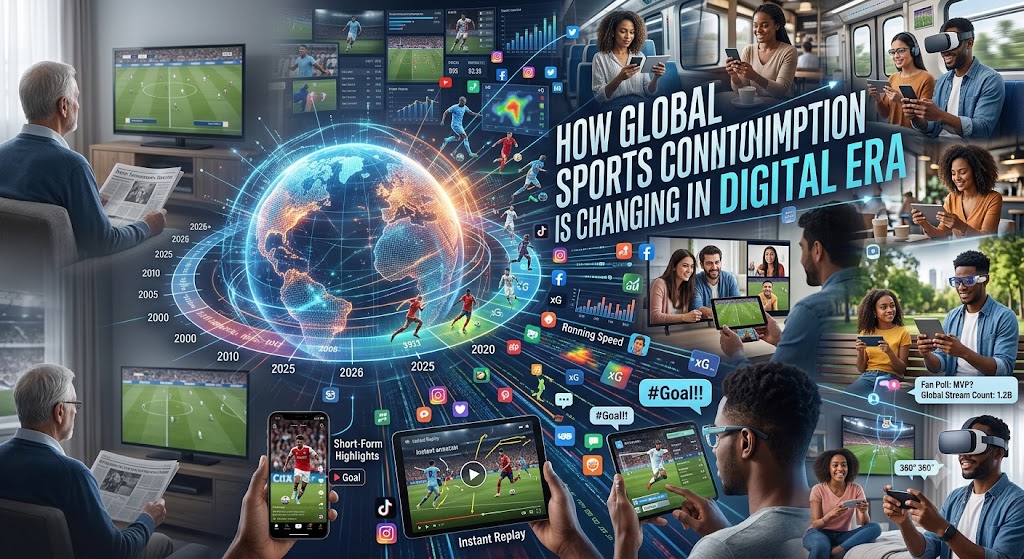
The traditional framework of gathered family viewing around a scheduled linear television broadcast has completely given way to an era defined by mobile accessibility and individual curation. Modern sports fans are increasingly turning their backs on rigid, long-term cable commitments and expensive, non-negotiable base packages that bundle unwanted channels. Instead, today's consumer expects dynamic, high-definition streaming environments that operate flawlessly across smartphones, tablets, and smart televisions. This shift has forced major corporate rights holders to completely pivot their broadcast operations toward agile cloud networks to survive.
The Search for Seamless Discoverability Platforms
As multi-million dollar sporting broadcast rights splinter across a chaotic labyrinth of independent, region-locked digital subscriptions, fans face constant daily frustration when trying to locate live events. This high level of industry fragmentation is precisely why independent web dashboards and online directories have seen a massive explosion in global search visibility. Digital navigation platforms like Totalsportek have quickly stepped in to fill this critical administrative void by functioning as structured, community-focused hubs. By centralizing global schedules, providing instant score tickers, and tracking live event data, these aggregators help fans navigate a convoluted digital market from a single point of entry.
World Cup Dramatics Fuel Real Time Streaming Waves
The unprecedented appetite for immediate, digital-first sports content is being perfectly illustrated by the historic internet traffic numbers recorded during the ongoing 2026 FIFA World Cup group stages in North America. Online discussion platforms reached an absolute fever pitch following a sensational night of action where Thomas Tuchel’s England secured a thrilling 4-2 masterclass victory over Croatia in Dallas, running parallel to a dominant 3-1 Colombia triumph against a highly resilient Uzbekistan team. Simultaneously, millions of fans raced to their devices to track real-time text updates as underdog DR Congo pulled off a shocking upset by holding Cristiano Ronaldo and Portugal to a dramatic 1-1 stalemate in Houston.
The Inevitable Triumph of Interactive Cloud Ecosystems
This monumental shift in global consumption habits proves that the future of sports media belongs exclusively to hyper-personalized, low-latency digital spaces. Traditional broadcasters are learning that maintaining consumer loyalty in 2026 requires abandoning static video feeds to fully integrate interactive second-screen ecosystems like automated data overlays, custom multi-camera angles, and live fan communities. As massive tech conglomerates continue to aggressively outbid legacy television networks to secure exclusive live rights for elite tournaments, the global sports culture will remain completely anchored in the cloud.