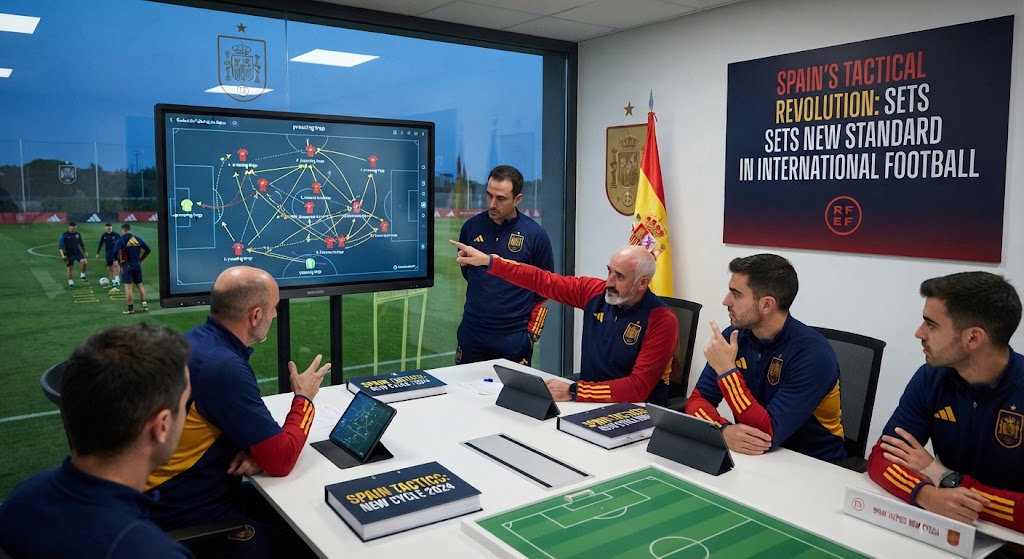
Spain's Tactical Revolution Sets New Standard in International Football
Published on: Jul 20, 2026
A New Era of Dominance for La Roja
Spain has officially ascended to the pinnacle of world football once again, securing their second FIFA World Cup title with a resilient 1-0 extra-time victory over Argentina at the MetLife Stadium. This triumph marks the culmination of a breathtaking journey for Luis de la Fuente’s side, who completed the tournament unbeaten while conceding only a single goal across eight matches. By adding the 2026 World Cup trophy to their 2024 European Championship title, Spain has not only reclaimed global supremacy but has also demonstrated an unprecedented level of consistency, maintaining a 38-match unbeaten streak that cements this generation as one of the most dominant in the history of the sport.
Adapting the Modern Game for Global Audiences
The evolution of Spanish football has been as much about tactical versatility as it has been about technical prowess. While the foundations remain rooted in the possession-first philosophy that defined their historic 2008–2012 era, the 2026 side introduced a faster, more vertical approach that has captivated fans worldwide. For those following the action through digital platforms, Soccer Streams provided a window into how this team successfully pivoted from the methodical buildup of the past to a high-pressing, aggressive style. This tactical shift allowed Spain to navigate a grueling tournament schedule with ease, proving that they could control the tempo of a game while remaining lethal in transition against world-class opposition.
Collective Brilliance Over Individual Stars
At the heart of Spain’s success was a commitment to collective identity rather than dependence on singular superstars. While individual talents like Rodri, who provided the engine room’s stability, and Lamine Yamal, who dazzled on the wings, played pivotal roles, the victory was a true team effort. Mikel Oyarzabal’s five-goal contribution and the heroics of substitute Ferran Torres in the final scoring the decisive goal in the 106th minute highlighted the immense depth of the squad. Furthermore, Unai Simón’s Golden Glove performance, backed by a resolute defense, ensured that Spain became the most dominant defensive team to ever claim the World Cup crown.
Cementing a Legacy for the Future
The aftermath of the final has been a celebration of a project that prioritized long-term development. With both the men’s and women’s national teams now ranked number one and holding World Cup titles simultaneously, the Spanish football program has extended its global influence further than ever before. For legends like Lionel Messi, whose quest for back-to-back titles ended in heartbreak, the final served as a testament to the sheer physical and tactical organization of the current Spanish setup. As the players and federation celebrate, the focus now shifts toward maintaining this standard, ensuring that the tactical blueprint laid out in 2026 continues to define the future of international football.