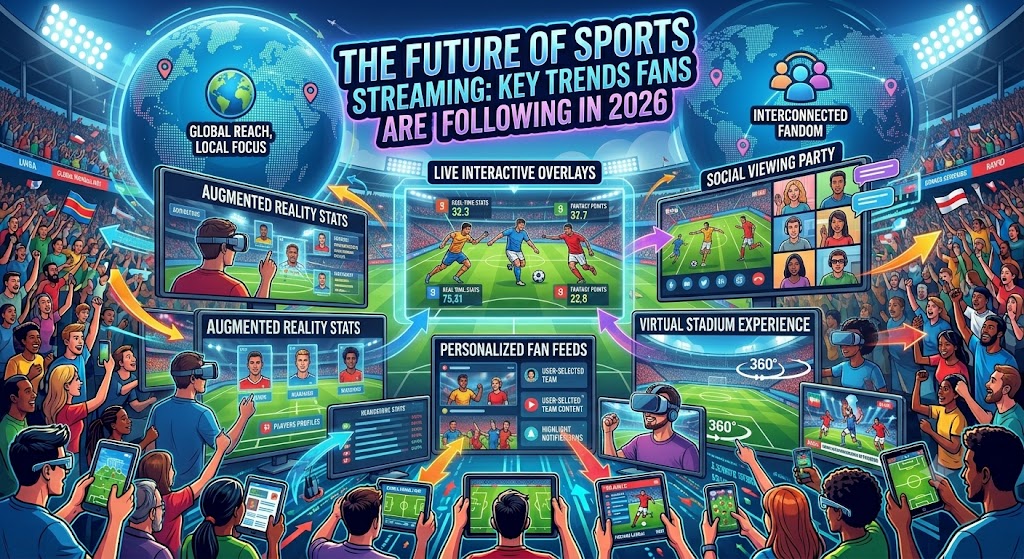
The Future of Sports Streaming: Key Trends Fans Are Following in 2026
Published on: Jun 16, 2026
The Unstoppable Evolution of Digital Broadcast Models
The sports broadcasting sector is undergoing a massive, technology-driven overhaul as standard cable structures steadily give way to highly flexible, web-based delivery frameworks. Modern audiences no longer view live games as an isolated event tied exclusively to a home television set; they expect an interactive, multi-screen matrix optimized for mobile devices, tablets, and smart monitors. As premium global sports properties continue to split their broadcasting footprints across dozens of isolated apps and regional channels, consumers are changing their search habits to seek alternative software ecosystems that consolidate schedules, match feeds, and in-depth analytical tools under a single interface.
Algorithmic Navigation and Directory Refinement
As this digital media ecosystem fragments further, the logistical necessity of guiding users toward active, reliable digital feeds has turned data indexing into an incredibly influential marketplace segment. Navigational aggregate directories have been forced to step up their technical architectures, discarding slow loading methods in favor of rapid, real-time index curation. Modern networks like Footybite have transformed from mere calendar listings into responsive information hubs that categorize broadcast data, server load variables, and transmission resolutions. By sorting through a crowded web environment and offering clean, ad-light layouts, these specialized aggregators have built a user-friendly blueprint that multi-billion dollar corporate applications are desperately trying to match.
Immersive Infrastructure Replaces Passive Experiences
Beyond simple stream discovery, the underlying software built to stream major events is experiencing a massive wave of backend engineering upgrades designed to deepen audience engagement. Today's sports fans expect zero-latency video play paired with dynamic data overlays, real-time fantasy score calculators, and localized community chat zones running directly beside the live player. By utilizing edge-computing content delivery networks (CDNs) and adaptive bitrate parameters, alternative streaming hubs ensure that high-velocity camera angles remain crystal clear even during moments of extreme concurrent web traffic. This continuous pivot from a standard, passive viewing layout to a highly personalized digital fan zone is entirely redefining what global consumers expect from a premium sports product.
Global Highlights Dominate Massive Tournament Cycles
The practical limits of these modern broadcasting architectures are being thoroughly pushed to the absolute extreme by an incredible summer calendar packed with elite athletic achievements. At the expanded 48-team international football showcase in North America, a series of stunning group-stage results has lit up social platforms and broken streaming traffic records across the web. Fans around the world tuned in to witness the ultimate underdog story as tournament debutants Cape Verde held heavy European favorites Spain to a historic, dramatic scoreless draw. This came right alongside an action-packed 1-1 draw between Saudi Arabia and Uruguay, while an intense, high-stakes 2-2 battle between Iran and New Zealand in Los Angeles left group brackets in complete chaos just as France and Senegal prepare to go head-to-head.
The Corporate Adaptation Mandate
As sports regulatory organizations and multinational media corporations finalize their long-term media distribution strategies for the upcoming developmental cycle, the message from the consumer market is loud and clear. Trying to combat the massive migration of users toward independent streaming ecosystems through legal pressure alone is an outdated concept; the only genuine solution is to innovate. Corporate executives are gradually realizing they must collaborate to build unified, affordable, and borderless digital streaming infrastructures that mirror the sheer convenience of decentralized indexes. Until official broadcasting platforms can eliminate regional blackout rules and complex multi-tier paywalls, independent directories will firmly control the evolutionary timeline of global sports media.