World Cup Host Nations USA, Canada, and Mexico Finalizing Preparations
Published on: Jun 03, 2026
North America Polishes the Grandest Stage in Sports
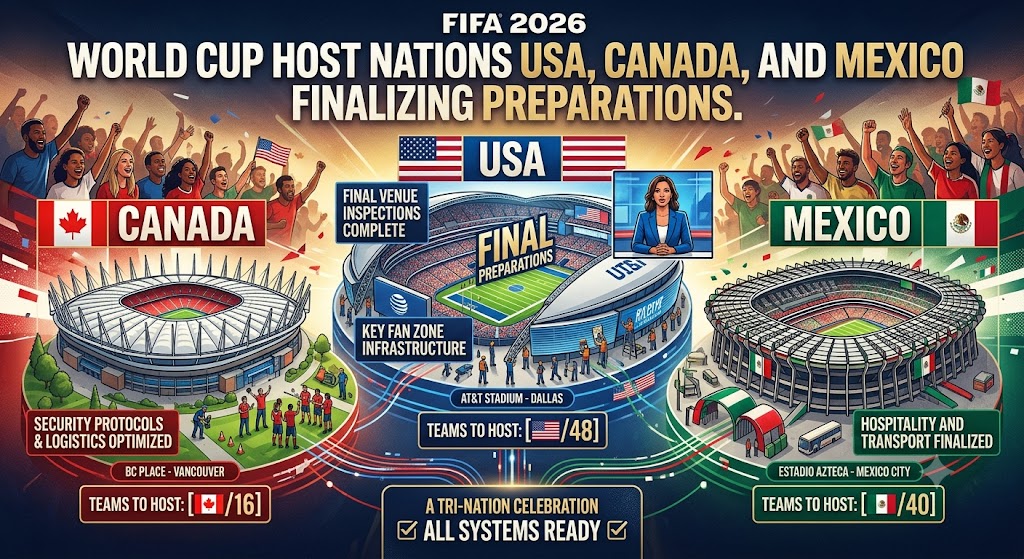
The massive tri-nation machinery driving the FIFA World Cup 2026 has entered its final, high-stakes operational phase as the United States, Canada, and Mexico lock down their infrastructure for the largest tournament in football history. With an expanded field of 48 nations competing across 16 iconic host cities, municipal planners and stadium operators are running full-scale simulation tests to optimize crowd control, public transport links, and localized security grids. The latest sports news out of North America indicates that major venues, from MetLife Stadium in New Jersey to the historic Estadio Azteca in Mexico City, have successfully finalized pitch conversions to meet FIFA's stringent natural grass requirements. Local organizing committees are working alongside federal transit agencies to handle the impending arrival of millions of international travelers, ensuring that airport custom terminals and inner-city light rail networks can seamlessly manage the unprecedented logistical weight of a continent-wide sporting festival.
A Massive Technical Blueprint for Global Broadcasts
Balancing a tournament across three massive nations and multiple time zones presents a technological hurdle that has never been attempted on this scale before. Because hundreds of millions of die-hard supporters will find themselves tracking mid-week matches while at work, commuting, or navigating awkward international time zone differences, the reliance on digital infrastructure is at an all-time high. To bypass regional broadcast blackouts and avoid the skyrocketing costs of premium subscription television, massive waves of casual viewers are already seeking alternative ways to keep tabs on their favorite national teams. Digital directories and long-standing sports index platforms like Totalsportek are seeing a major surge in preparatory web traffic as global fans search for stable, mobile-friendly landing pages ahead of the opening match. This digital migration highlights how critical open-web accessibility has become for the modern sports consumer, who demands instant, zero-latency access to live match data regardless of where they are on the planet.
Redefining Hospitality and Fan Zones Across Borders
Beyond the stadium gates, the host nations are investing heavily in massive, centralized fan festivals designed to bring the tournament's electric atmosphere to millions of non-ticket holders. From the sprawling urban landscape of Toronto’s downtown core to the vibrant fan parks in Dallas and Monterrey, these interactive hubs will feature giant high-definition screens, localized culinary showcases, and global musical acts. Organizers are placing a premium on cross-border cultural integration, developing unified travel visas and streamlined security protocols to allow traveling fans to follow their teams across international borders with minimal friction. Security coordinators are also deploying advanced biometric monitoring and smart-queue ticketing systems at major stadium bottlenecks to guarantee that safety parameters remain uncompromised without sacrificing the fluid, celebratory environment that defines football's ultimate showpiece.
The Final Countdown to Kickoff
As the final administrative checkboxes are ticked, the pressure shifts from the construction crews to the technical and logistics staffs who must execute this multi-billion dollar operation without a hitch. Team base camps across all three nations have been completely cleared and handed over to arriving international squads, who are beginning to touch down for acclimatization training sessions. The immense economic and cultural impact of this joint venture is projected to set a permanent benchmark for how future mega-sporting events are designed and executed on a global scale. If the operational synergy between the USA, Canada, and Mexico holds firm under the immense weight of the opening week fixtures, this historic collaboration will not only redefine North American sports infrastructure but deliver the most deeply connected and widely watched tournament the world has ever seen.